LinkedIn prospecting strategy for small B2B teams
Build a focused LinkedIn prospecting strategy with a 30-day plan, evidence thresholds, stop rules, and a simple review worksheet.
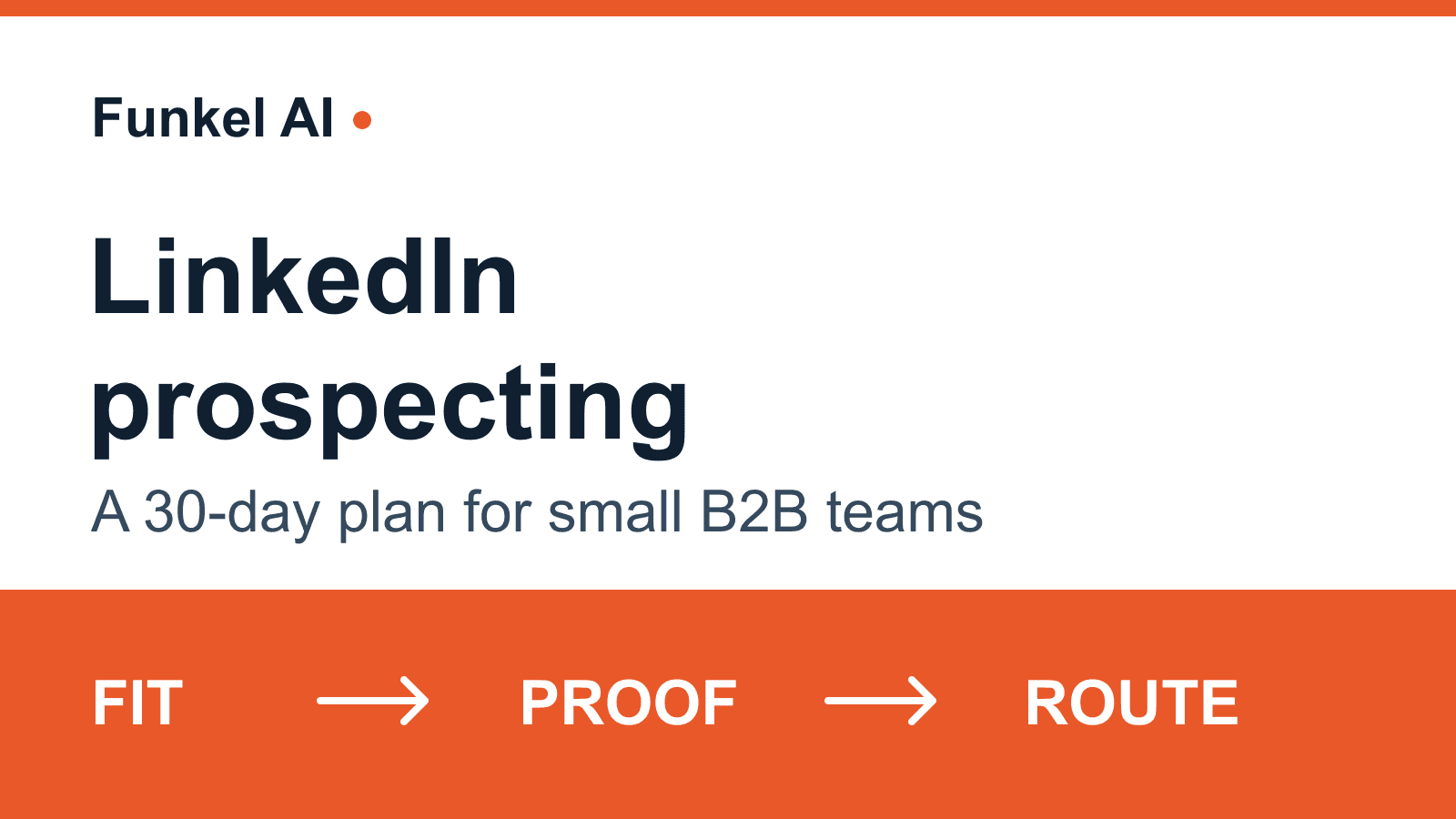
A LinkedIn prospecting strategy defines one buyer group, the evidence that makes contact useful, the next action for each person, and the results the team will review. Start with a small manual sample. Keep a reason beside every candidate, and widen the search only after you understand which reasons produce relevant conversations.
This is the planning layer. If you need the search and message steps, use our seven-step LinkedIn prospecting guide. LinkedIn describes prospecting as finding and connecting with potential buyers in its sales prospecting guide. The plan below adds a decision before each connection: does the available evidence justify action now?
Decide what counts as a prospect before you search
A job title is a search filter, not a reason to contact someone. Choose one narrow buyer lane for the first month. Write it as a sentence: We help [role] at [company type] with [specific problem] when [observable change] occurs. Add the company sizes, regions, and roles you will exclude. This gives you a way to reject attractive profiles that cannot use what you sell.
For example, a small B2B software team might study founders who are hiring their first sales development representative. The hiring post is an observed fact. A need for a new prospecting process is a hypothesis to check, not a fact to state in the first message. This example is hypothetical.
| Decision | Write down | Stop when |
|---|---|---|
| Company fit | Market, size, region, and problem | The company cannot plausibly use the offer |
| Person fit | Role and likely ownership of the problem | The identity or responsibility is unclear |
| Evidence | Source URL, observed fact, and date | The fact is stale, private, or only inferred |
| Route | Watch, connect, or message, with one reason | The evidence does not support an interruption |
Choose one evidence source for the first test
Start with one source you can inspect consistently. A public post, a company hiring update, a relevant discussion, and a saved target account list provide different kinds of evidence. A source can identify a candidate without proving that the person wants a sales message. Keep the original source and date beside your notes.
LinkedIn search can support this first manual pass. Sales Navigator adds Personas, saved accounts, advanced search, and alerts, as shown in LinkedIn's current Sales Navigator guide. Use those features when they save repeated research on a defined account set. Our Sales Navigator workflow shows the execution steps.
Keep lead sources separate from outreach channels. A public discussion can start research, but it is not permission to send a LinkedIn message. Verify the person, the source, and the route before contact. The LinkedIn intent signals field guide helps distinguish a useful change from background activity.
Run a 30-day LinkedIn prospecting test
This schedule is a learning plan, not a promise of replies or meetings. Use one buyer lane and one evidence source for the first pass. Change one part of the process at a time so the result stays interpretable.
| Week | Work | Decision at the end |
|---|---|---|
| 1: define | Write the buyer lane. Audit 20 consecutive candidates from one search. | Are the filters returning the right companies and people? |
| 2: test | Contact a small manual batch with inspectable reasons. Keep watch-only records separate. | Can each message point to a real, current fact? |
| 3: review | Review replies, declines, and silence with the original source beside each record. | Which reasons led to relevant conversations, not just acceptance? |
| 4: adjust | Change one filter, evidence rule, or first question. Repeat the small audit. | Did the change improve fit or evidence quality? |
The first 20 profiles are an audit sample, not a target for daily sending. Review consecutive results so you see weak matches as well as good ones. Our 20-profile audit gives the fields and review method.
Copy this prospecting review worksheet
Use one row per candidate. The table below shows the fields to keep. Do not copy personal details into a shared document unless your team has a lawful reason and appropriate access controls. The worksheet focuses on the decision and its source.
| Field | Question to answer |
|---|---|
| Buyer lane | Does the company and role match the written criteria? |
| Source and date | Where is the original public fact, and when did it occur? |
| Fact and hypothesis | What is observed, and what is only your possible explanation? |
| Next action | Skip, watch, connect, or message? Why? |
| Outcome | Was there a relevant conversation, a decline, or no response? |
A hypothetical record might say: Public hiring post, dated this week. The founder fits the buyer lane. A new sales process may be needed, but that is unverified. Watch or connect with a question about the role; do not assert the company has a pipeline problem.A weak record might say only: Liked a category post. That does not justify a sales message on its own.
Measure decisions before response rates
Count candidates reviewed, companies that fit, people whose role fits, records with inspectable evidence, invitations sent, accepted invitations, and relevant conversations. Keep each denominator visible. For example, accepted invitations ÷ invitations sentanswers a different question from relevant conversations ÷ people contacted. Review outcomes by reason before you change copy.
Do not use an acceptance rate as a proxy for buyer need. A polite connection can be accepted without a business reason. Record why a person replied and whether the conversation matched the original hypothesis. If your sample is small, treat the result as a prompt for another test, not a market benchmark.
Use a stop rule for weak evidence and unwanted contact
Stop a route when the identity is unclear, the source does not support the claim, the person declines, or a reply asks you to stop. Review your process against the current LinkedIn User Agreement. A tool does not remove the need for a sound reason, a compliant workflow, and human judgment. Compare tool roles in our LinkedIn prospecting tools guide.
When a person qualifies and a connection note helps, keep it short and tied to the observed fact. The connection request message examples show how to write that note. Do not turn the first note into a full discovery call.
FAQ
What is a LinkedIn prospecting strategy?
A LinkedIn prospecting strategy defines which buyers to research, what evidence makes contact timely, which action is appropriate, and how the team will review outcomes. It keeps list building separate from outreach.
How should a small B2B team start LinkedIn prospecting?
Choose one narrow buyer lane and one evidence source. Audit 20 consecutive candidates, record fit and source proof, then test a small manual batch. Review relevant conversations and stop reasons before widening the search.
Do you need Sales Navigator for a LinkedIn prospecting strategy?
No. Standard LinkedIn search can support an early manual test. Sales Navigator is useful when saved accounts, Personas, richer filters, and alerts reduce repeat research across a larger account set.
What should a LinkedIn prospecting scorecard measure?
Record candidates reviewed, buyers who fit, records with inspectable evidence, people contacted, accepted invitations, relevant conversations, and stop reasons. Keep the denominator for each rate visible and compare results by evidence source.
Read next
- How to use LinkedIn for sales prospecting: 7 stepsUse a 7-step LinkedIn prospecting workflow, copy a 20-profile audit, and set clear AI automation and human-review boundaries.
- Best B2B intent data providers: 8 options compared for 2026Compare eight B2B intent data providers by signal grain, evidence to inspect, and the smallest useful first route. Copy a proof-first demo record.
- Buyer intent signals: 11 examples and a signal contractLearn 11 buyer intent signal examples, build a signal contract, and measure signal quality before automating outreach.