Why we built Funkel
Outbound is broken because the prevailing tools force a tradeoff between volume and price. We thought there was a third path, signal-based outreach you run yourself, so we built it.
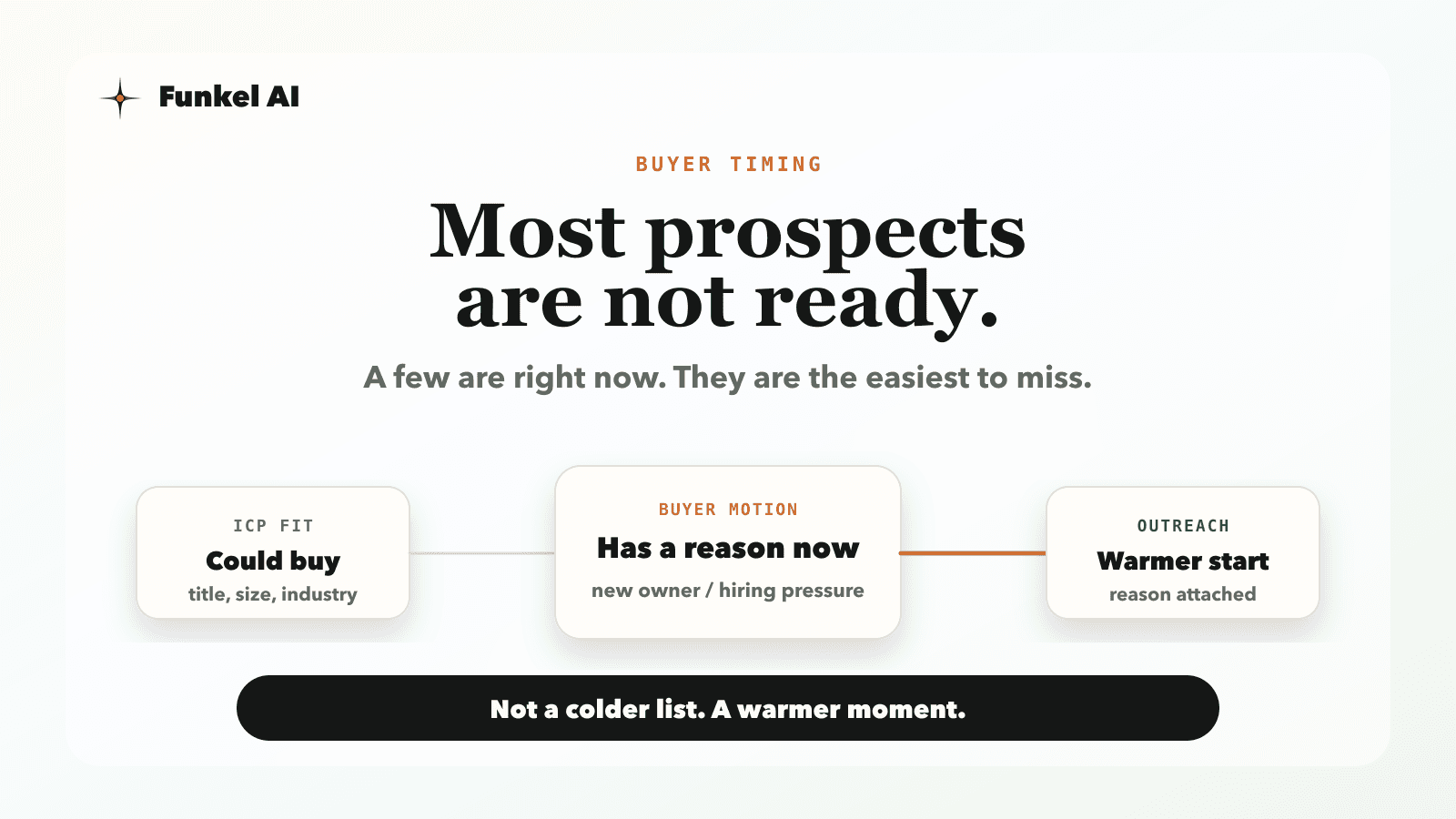
Most B2B teams running outbound today are stuck choosing between two bad deals.
Option one is hiring a lead-gen agency. They build a list, send from accounts you do not own, give you a Monday report, and charge you between two and three thousand euros a month for the privilege. The work is opaque. When the contract ends you have nothing to show for it except a spreadsheet of names that, at best, your CRM will recognize.
Option two is buying automation software. Pick your poison: Lemlist, Apollo, Expandi, the rest. They all sell volume. Connect every account, send hundreds of messages a day, run multi-channel sequences. Six months later, reply rates are dropping, accounts are getting flagged, and your brand takes the hit.
We thought there was a third option. Outreach that is yours, not an agency’s. Quiet enough to keep your accounts safe. Smart enough that every message has a reason. Cheap enough that a solo founder can afford it.
The thesis
The reason cold outbound is broken is not that nobody is doing enough of it. The reason it is broken is that nearly all of it is sent at the wrong moment, to people who are not paying attention, with no information beyond a job title and a company name.
A buyer who just changed jobs is in a different mental state than the same buyer six months earlier. A buyer who posted about replacing a competitor is more available than a buyer who posted about their weekend. A buyer who visited your pricing page three times in 48 hours is, somewhere in their head, already weighing build versus buy.
These moments are not invisible. LinkedIn shows most of them, every day, in public. The problem is that no human can monitor thirty thousand profiles in parallel and notice the four that now show real buying intent. We unpack the full set in our field guide to LinkedIn intent signals.
What Funkel is
Funkel watches for the moment a buyer gives you a reason to reach out. Paste the URL of what you are taking to market. Funkel reads the page, drafts a buyer profile, and starts looking. When someone fits and shows intent, Funkel scores the lead and drafts a message from the signal. You approve, edit, or skip.
The rule is simple: send fewer messages, and only when there is a clear reason.
What Funkel skips
Funkel is not for blasting a thousand identical templates. It is not an agency that spends two thousand euros before you see the work. It keeps the channel mix narrow: LinkedIn is where buyers signal, email gives follow-up a second channel, and both run with per-account pacing built to keep your senders out of trouble.
Customization is limited. The defaults are narrow on purpose: set up in ten minutes, then spend your time on replies, not knobs.
The price
Funkel is priced as software, not as a managed lead-gen agency. One Growth plan gets you two senders, two AI agents, and unlimited LinkedIn campaigns. If you need more, add senders or agents one at a time.
Growth is $99/mo with a 30-day money-back guarantee if Funkel AI is not a fit. Set up your workspace, find your first warm leads, and decide from the real product.
What to expect
Reply rates still depend on your buyer profile, offer, tone, and the signals you choose. Funkel gives you tighter timing, fewer irrelevant messages, and a clearer reason for every lead. The craft is still yours.
That is what Funkel is. Quiet outbound, paced for the moment, priced for the operator. Built by a small team because nobody was building it, and the founders we kept talking to were burning out trying to do it by hand.
Read next
- Best B2B intent data providers: 8 options compared for 2026Compare eight B2B intent data providers by signal grain, evidence to inspect, and the smallest useful first route. Copy a proof-first demo record.
- Buyer intent signals: 11 examples and a signal contractLearn 11 buyer intent signal examples, build a signal contract, and measure signal quality before automating outreach.
- What is B2B intent data? Types, examples, and a practical workflowLearn what B2B intent data is, compare first-, second-, and third-party sources, and use three examples to choose a safe sales action.